
The Mountain:
Why Sheer Grit is a Terrible Business Architecture

Every seasoned leader prides themselves on resilience. The ability to fight uphill battles, succeed against all odds, and rise to challenges most would run from. Some may boast about the ability to solve a crisis in the eleventh hour, carry the weight of the entire enterprise on our shoulders, and call it grit. In operational terms, relying on grit is a systemic failure, and systems are the gold standard for success. I have spent over 20 years solo camping, hiking, and backpacking in the backcountry. Navigating remote and not-so-remote wilderness. I know my gear, I know the terrain, and I have a high tolerance for operational friction; yet, on a recent trip to a familiar remote campground, one lacking running water, which required that I pack in all my own water and food just as a baseline for a 4-day stay, meaning that’s an average of 2 gallons of water per day. A sequence of environmental shifts that struck me as all too eerie, including physical bottlenecks and a literal security breach, forced me to pack up in the waning light of dusk and execute an immediate extraction.
Driving home, it clicked: too many founders run their companies exactly how I was trying to run that campsite. Relying entirely on their own physical backbone to compensate for broken infrastructure, poor layout, and a lack of fail-safes. When a business runs on the founders’ backbone rather than an engineered infrastructure, it doesn’t scale, and if it does, it’s just waiting for one mistake (a catastrophic fracture) to fall apart.
Here is what a broken-into campsite can teach us about building a resilient, autonomous operational architecture.
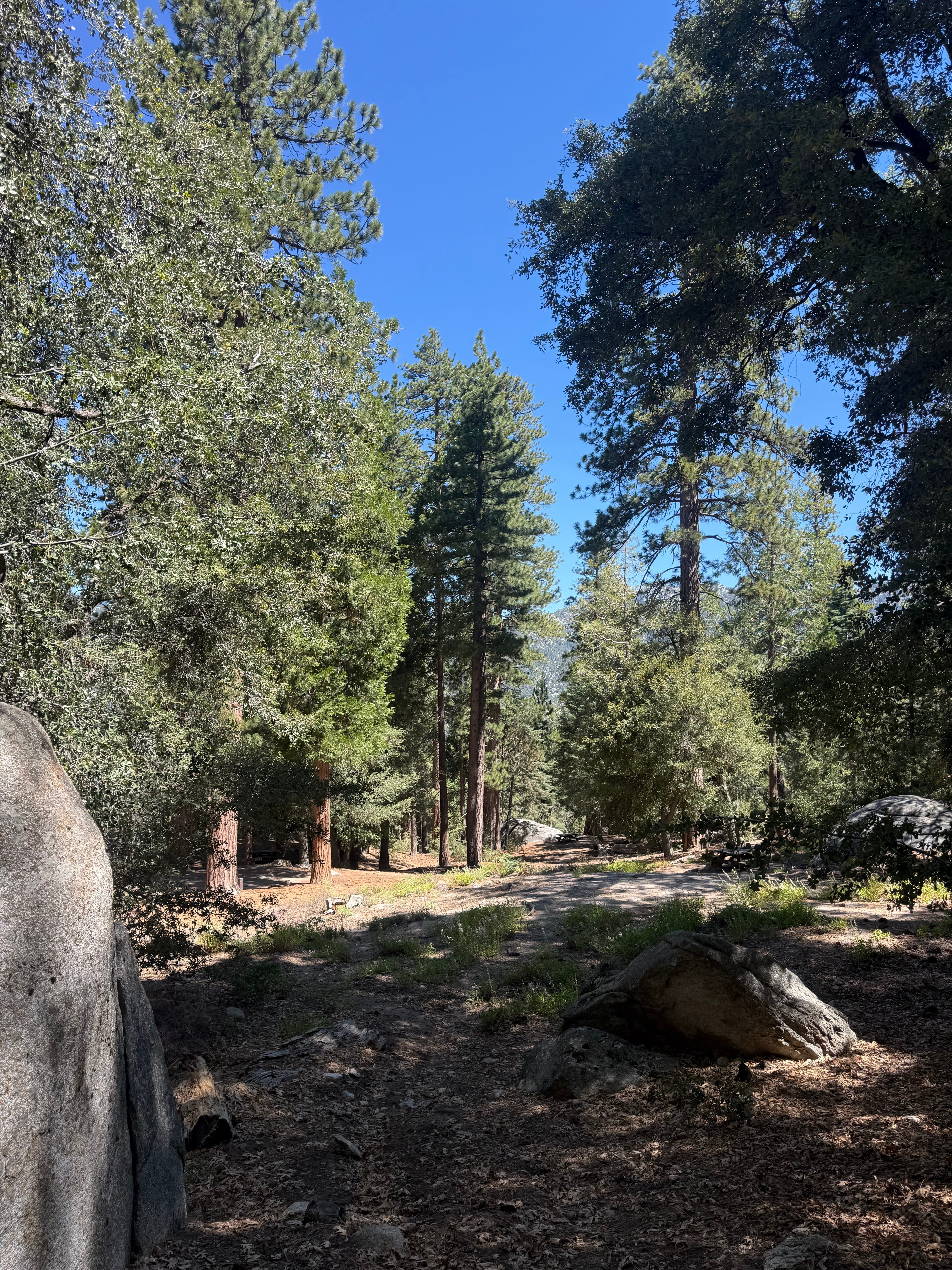
The 50 lbs water jug syndrome (the trap of manual scaling).
On this trip, the terrain changed. I was stationed on a steep hill, rendering my standard transport wagon completely useless. To survive, I had to manually lug 50-pound jugs of water up an incline, all while managing the looming threat of an autoimmune flare (ok, I’m smart, and I hacked this: I kept the heavy water jug at the car and lugged smaller 1-2-gallon jugs up the hill). But still. Doing dishes in your parking space is not ideal. In business, this kind of dilemma is a founder’s backbone dilemma. When the company lacks standard operating procedures and automated workflows, every new client, product, or operational requirement is just another heavy lift for the founder to handle manually.
Let’s talk symptoms: You are working 70- 80-hour weeks doing low-leverage tasks because it’s faster if it’s just do it myself.
The systemic flaw: You have built a job, not a business architecture. If your physical battery drains, or if life throws a curveball like an employee getting sick, or if you suddenly lose a loved one, the entire operation grinds to a screeching halt.
So what’s the operational fix? If the process requires your specific manual physical effort to function daily, the architecture is broken. True scale requires “wagons” systems, automations, and clear policies that work regardless of the slope of the hill.
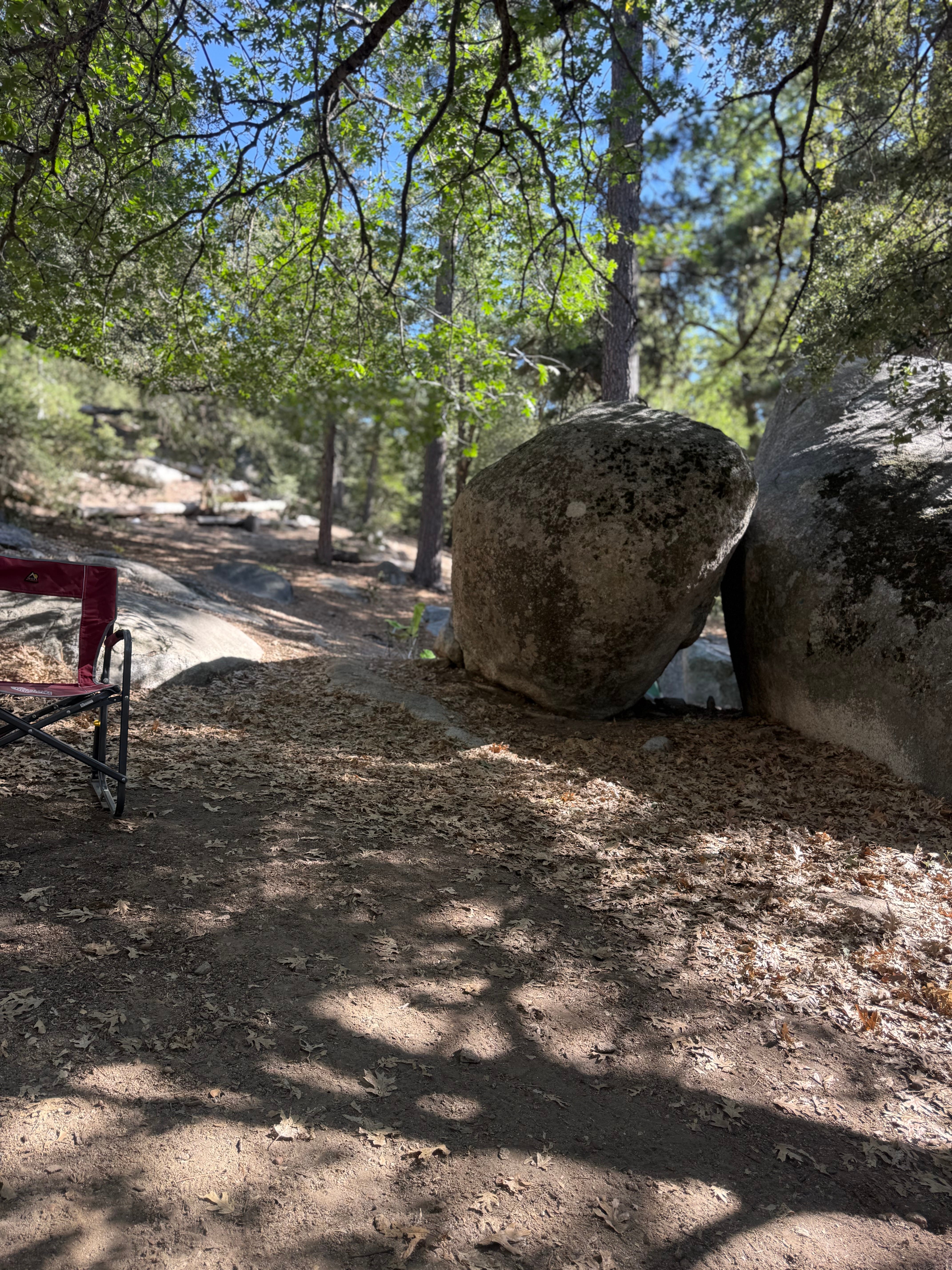
The backside of the loop (visibility and the blind spots).
For years, I stayed on the front side of the loop of this specific campground, wide open, bright, and with clear lines of sight. The open expanse of the valley floor below me. This time, I was “budgeted” against the mountain on the backside. I was excited to try a new quiet secluded spot, but when I got there I felt boxed in. My visibility was drastically reduced, and I was butted up against a mountain with signs duct-taped to the rock that read “caution rattlesnake” and “rattlesnake under this rock”; that was odd, to say the least.
When you lack a structured 360-degree audit of your business operations, you are operating on the back side of the loop. Without the operational bone structure, you cannot see threats coming. You are forced into a state of chronic hyper-vigilance, constantly scanning for errors, missed deadlines, or unhappy clients because there are no systemic guardrails to catch them for you
Later during the trip while driving into town, I noticed a decapitated rattlesnake, a big one. It struck me as odd. Was this the snake the signs were warning about? Why was it out in the open and just left on the side of the road? Had an animal got it, or was this someone playing a game?
The unzipped tent: Ignoring hard boundaries.
The turning point of my trip was a literal security breach. Finding an anomalous, perfectly clean object zipped inside my tent while we were away from the site in town. A tent is a hard boundary. Once that perimeter is crossed, an unknown variable, the risk profile changes instantly.
In corporate architecture, businesses tolerate “unzipped tents” every day.
These look like:
Scope creep from clients that bypass contracted agreements.
Employees violating core policies due to a lack of clear compliance frameworks.
Founders allowing their personal time, weekends, and mental health to be constantly invaded by non-emergency operational noise.
If your business doesn’t have hard, automated boundaries backed by policy and incident response protocols, you will constantly find yourself reacting to crises in a state of panic rather than executing a preplanned strategy. This is what’s known as firefighting, and I’ve seen it in businesses making 100k a year and businesses making 200 million a year.
Extraction is a Tactical Win, Not an Operational Failure
When the campsite’s risk profile escalated, I chose to leave. A primitive instinct might whisper that walking away is “failure” of grit. That you are being silly. But a seasoned operator knows better. Extraction is a calculated tactical decision.
(Gut instincts are always to be trusted, particularly as women).
As a consultant, my goal is to identify an architectural framework that allows the founder to legally, operationally, and mentally “extract” themselves from the daily grind without the tent collapsing.
If you cannot step away from your business for a week, a month, or a quarter without everything falling apart, your architecture is failing you. Stepping away isn’t a sign that you don’t care; it is the ultimate proof that your systems work.
Building the corporate bone structure.
An auditor’s job is to look at your operations and say: “Here is where your perimeter is compromised. Here is the exact policy you need to erect to protect your assets.
How I work: Diagnostic Architecture vs. Construction
When the risk profile of my campsite escalated, I chose to leave. It was a calculated tactical decision based on 20 years of environmental data. In my consulting practice, I don’t build the tent for you, and I don’t haul your water. I am the forensic investigator who conducts the 360-degree operational audit. Creates an implementation plan outline and hand it back to you to execute.
I go into your business, identify the friction points and bottlenecks, and hand you the exact blueprint for the “bone structure” your company needs to survive without you. I tell you precisely where the fractures are and what infrastructure needs to be built so you can step away. From there, you have two choices.
Hand the blueprint to your team to build internally.
Retain my services for a separate, dedicated implementation scope so I can oversee the construction.
Stop running your business on your backbone. Let’s run a 360 audit, find out where your architecture is failing, and map out the skeleton your business needs to stand on its own two feet.
Ask a question or get an answer: here